
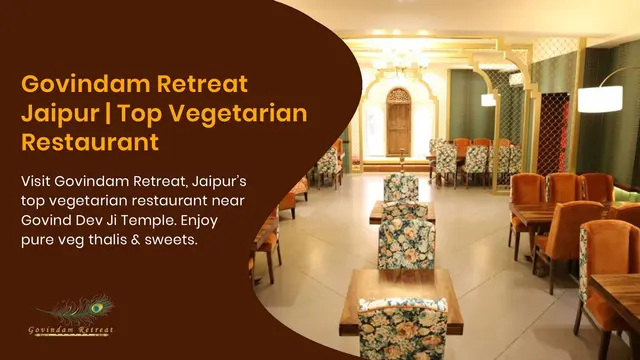
Govindam Retreat Jaipur | Culinary Destination of Distinction
Jaipur is a city people remember through experiences.
The view of Hawa Mahal in the morning. The courtyards of City Palace. The sound and energy around Govind Dev Ji Temple. The colors of the Pink City markets. And, for many visitors, the taste of Rajasthan food after a long day of exploring.
Govindam Retreat Jaipur brings that food experience into one setting near Govind Dev Ji Temple.
Its focus on vegetarian dining, Rajasthan-inspired cuisine, family hospitality, and heritage atmosphere makes it particularly relevant for visitors who want their meal to feel connected with Jaipur rather than simply eat at another restaurant.
Table of Contents
- Discover the Govindam Retreat Jaipur Experience
- Rajasthan Cuisine at the Heart of the Journey
- Vegetarian Dining With Regional Variety
- Rajasthani Thali and Traditional Food Experience
- Jaipur Sweets and the Halwai Tradition
- Family, Tourist and Group Dining
- Heritage Dining Near Govind Dev Ji Temple
- How to Plan Your Govindam Retreat Visit
- Conclusion
- Frequently Asked Questions
Discover the Govindam Retreat Jaipur Experience
A culinary destination should provide more than food.
It should give diners a reason to remember where they ate.
Food With a Sense of Place
When tourists travel to Jaipur, they can order familiar restaurant food or use the meal to discover Rajasthan.
Regional cuisine provides the second experience.
Ingredients, cooking traditions, breads, sweets, and serving styles can all tell visitors something about the region.
Vegetarian Food as the Main Experience
Vegetarian dining does not need to feel like a reduced menu.
Rajasthan's food traditions offer enough variety to build complete meals around:
- Lentils
- Gram flour
- Grains
- Regional vegetables
- Dairy
- Traditional breads
- Accompaniments
- Sweets
Hospitality Matters
A guest may arrive without knowing what Gatte Ki Sabzi or Ker Sangri is.
Helpful service can explain unfamiliar food and make the experience easier.
A Meal That Fits the Jaipur Journey
Govindam Retreat's location near Govind Dev Ji Temple means dining can become part of a heritage itinerary rather than a separate journey across the city.
Rajasthan Cuisine at the Heart of the Journey
Rajasthan cuisine was shaped by geography, local ingredients, community traditions, vegetarian food culture, and generations of practical cooking.
Dal Baati Churma
Dal Baati Churma is one of Rajasthan's most recognized food traditions.
It combines three different preparations:
- Savory dal
- Baked wheat baati
- Sweet churma
The contrast between the three creates the experience.
Gatte Ki Sabzi
Gatte Ki Sabzi highlights the creative use of gram flour in Rajasthan cooking.
Gram-flour dumplings add texture while the gravy brings spice and richness.
Ker Sangri
Ker Sangri connects food directly with Rajasthan's desert landscape.
Its regional ingredients make it particularly interesting for tourists who want to taste something closely linked with the state.
Kadhi
Rajasthan-style Kadhi uses yogurt and gram flour to create a tangy and comforting preparation.
Traditional Breads
Regional breads may include:
- Bajra Roti
- Missi Roti
- Wheat breads
These breads help complete the meal and introduce visitors to Rajasthan's grain traditions.
Vegetarian Dining With Regional Variety
One of Rajasthan cuisine's strengths is the amount of variety it creates without depending on meat.
Beyond Standard Restaurant Food
A vegetarian meal in Jaipur does not have to revolve around paneer.
Visitors can explore:
- Dal Baati Churma
- Gatte Ki Sabzi
- Ker Sangri
- Kadhi
- Regional breads
- Thali dishes
- Traditional sweets
Family-Friendly Vegetarian Dining
Shared vegetarian dishes work naturally for families.
Children and first-time diners can taste smaller portions while other family members explore stronger regional flavors.
Jain-Friendly Choices
Vegetarian and Jain food are not the same.
Jain dietary requirements may involve avoiding:
- Onion
- Garlic
- Root vegetables
- Other ingredients according to individual practice
Guests should explain their exact needs before ordering.
No Onion No Garlic Food
Some diners only avoid onion and garlic.
This should be communicated separately so suitable dishes can be identified correctly.
Rajasthani Thali and Traditional Food Experience
For first-time visitors, a thali can be one of the easiest ways to understand Rajasthan cuisine.
Many Flavors in One Meal
Depending on the current menu, a Rajasthan-inspired thali may combine:
- Dal
- Regional vegetables
- Gatte Ki Sabzi
- Ker Sangri
- Kadhi
- Breads
- Rice
- Accompaniments
- Sweet dishes
There is no single fixed menu that defines every authentic Rajasthani thali.
Why Tourists Like a Thali
A visitor does not need to understand every dish name before ordering.
A thali allows different foods to be tasted together.
Balance Matters
A good thali should move naturally between:
- Savory
- Tangy
- Earthy
- Rich
- Sweet
The goal is not simply to place the largest possible number of bowls on the table.
Learn Before You Visit
The Best Rajasthani Thali in Jaipur guide provides a deeper explanation of the dishes, ingredients, and traditional dining experience.
Jaipur Sweets and the Halwai Tradition
Jaipur's culinary identity includes a strong sweet-making culture.
Ghewar
Ghewar is one of Rajasthan's most recognizable sweets.
It becomes especially visible during festive periods such as Teej and Raksha Bandhan.
Rabri
Rabri is created by slowly reducing milk to develop a rich texture and flavor.
Churma
Churma provides the sweet element in Dal Baati Churma and represents another side of Rajasthan's grain-based food traditions.
Traditional Halwai Skill
Sweet-making depends on careful control of:
- Heat
- Timing
- Sugar consistency
- Milk reduction
- Frying
- Texture
The Traditional Jaipur Sweets – Govindam Retreat's Authentic Halwai Experience guide explores this craft in greater detail.
Seasonal Availability
Not every traditional sweet needs to be available every day.
Guests visiting specifically for a particular sweet should confirm current availability.
Family, Tourist and Group Dining
Different guests need different things from a restaurant.
Family Dining
Families may include:
- Children
- Parents
- Grandparents
- Visiting relatives
A varied vegetarian menu allows different generations to share a meal comfortably.
Tourist Dining
First-time visitors can ask:
- Which dishes are traditionally Rajasthani?
- What should I try first?
- Which dish is mild?
- How is this dish normally eaten?
- Which sweet is local?
- What is available today?
Simple guidance can make regional cuisine much easier to explore.
Group Dining
Larger groups should consider confirming seating and meal arrangements before visiting.
Celebrations and Corporate Dining
For birthdays, anniversaries, corporate meals, wedding-related dining, or other gatherings, current capacity, menu, timing, décor, and event arrangements should be discussed directly beforehand.
Heritage Dining Near Govind Dev Ji Temple
Location is an important part of the Govindam Retreat experience.
Near Govind Dev Ji Temple
The restaurant's proximity to Govind Dev Ji Temple can be useful for:
- Families
- Pilgrims
- Tourists
- Heritage travelers
Visitors can plan their meal around their temple visit.
City Palace and Historic Jaipur
The wider heritage area also connects naturally with City Palace and historic parts of the Pink City.
Combine Food and Sightseeing
A Jaipur heritage day can include:
- Morning sightseeing.
- Govind Dev Ji Temple.
- Rajasthan-inspired vegetarian dining.
- City Palace or nearby heritage exploration.
- Traditional markets.
- A local sweet or evening experience.
The exact route should be planned around current attraction timings.
Heritage Beyond Architecture
Jaipur's heritage is not limited to buildings.
It also lives in:
- Food
- Hospitality
- Crafts
- Music
- Festivals
- Family traditions
A meal can therefore become part of cultural sightseeing.
How to Plan Your Govindam Retreat Visit
A little preparation can make the experience easier.
Check Current Timings
Restaurant hours and meal services can change.
Confirm current timings before making a special trip.
Confirm Specific Dishes
If you are visiting specifically for:
- Dal Baati Churma
- Rajasthani thali
- Ker Sangri
- A traditional sweet
- Another particular dish
check current availability beforehand.
Share Dietary Requirements
Tell the restaurant clearly about:
- Jain food
- No onion no garlic requirements
- Food allergies
- Other important dietary needs
Plan Larger Groups
Families, tourist groups, and corporate groups should consider confirming seating before arriving.
Discuss Celebrations in Advance
For special occasions, confirm any requirements involving:
- Cake
- Decoration
- Seating
- Menu
- Timing
- Event arrangements
Do not assume these services are automatically included.
Conclusion
Govindam Retreat Jaipur represents a dining experience built around more than one dish.
Its appeal comes from the combination of vegetarian food, Rajasthan-inspired cuisine, family hospitality, traditional flavors, heritage atmosphere, and its location near Govind Dev Ji Temple.
For tourists, regional food can become another way to understand Jaipur. Dal Baati Churma introduces one of Rajasthan's most famous meals. Gatte Ki Sabzi highlights gram-flour traditions. Ker Sangri connects food with the desert. Traditional breads reveal local grains, while sweets introduce festival and halwai culture.
For families, sharing these foods can turn lunch or dinner into a cultural experience that different generations enjoy together.
Guests with Jain requirements, allergies, specific menu interests, larger groups, or celebration plans should confirm current arrangements directly before visiting.
A culinary destination of distinction should leave you with more than a full plate. It should leave you understanding a little more about the place, people, and traditions behind the food.